DESTINY is applying the digital evidence synthesis tools we develop to six climate and health impact cases. The impact cases are informed by Alive communities of practice made up of evidence producers and evidence users.
Our objective is to co-create equitable access to trustworthy, continuously updated evidence, informing policy and practice which improve people’s lives through better climate and health outcomes.
Using the open data infrastructure to deliver these impact cases allows us to continuously evaluate and improve the performance of our tools, to learn what works, and to develop methodological guidance for the responsible use of AI to support the evidence synthesis community.
Impact cases
1. Living evidence map of the global climate and health literature
Climate and health research is expanding faster than any traditional review process can keep pace with. In 2025, the field lost one of its few centralised resources when the NIEHS Climate Change and Human Health Literature Portal was closed. DESTINY’s Impact Case 1 (IC1) responds to this gap with two elements: a dedicated climate and health evidence repository and, built on it, a living evidence map that is continuously updated as new literature is published.
2. Living evidence map and synthesis on climate-related health impacts in cities
Using the climate and health repository as a foundation, we will extract and focus on studies relevant to cities and human settlements. Having a dedicated impact case for cities addresses the specific characteristics of urban contexts (density, infrastructure, governance structures and social dynamics) that require a city-level synthesis rather than a global review.
3. Living systematic review of clean cookstove and insecticide-treated bed net (ITN) interventions
We will provide rigorous, synthesised and living evidence on the effects of these interventions on mortality and related health and environmental outcomes, using state-of-the-art methods for evidence identification, appraisal, and synthesis.
4. Mixed-methods living systematic review on interventions to promote the uptake of healthier and low carbon food options in institutional settings
We are developing a living systematic review and evidence gap map using a mixed-methods approach to identify and synthesise evidence on interventions that promote healthier and low-carbon food options.
5. Effective evidence transfer on urban heat adaptation and health
We are examining which urban heat adaptation interventions reduce heat-related mortality, illness, and adverse effects on well-being in cities in low- and middle-income countries (LMICs), and under what conditions these interventions work.
6. Nature-based solutions to reduce climate-related health risks in low- and middle-income countries
We are producing an evidence synthesis in partnership with the Planet Pillar of the UN SDG Synthesis Coalition. This synthesis examines nature-based solutions as protective infrastructure that reduces hazard, exposure, and vulnerability across low- and middle-income countries (LMICs), in cities and rural areas alike. The review covers extreme heat, flooding, storm surge, coastal erosion, landslides, and drought.
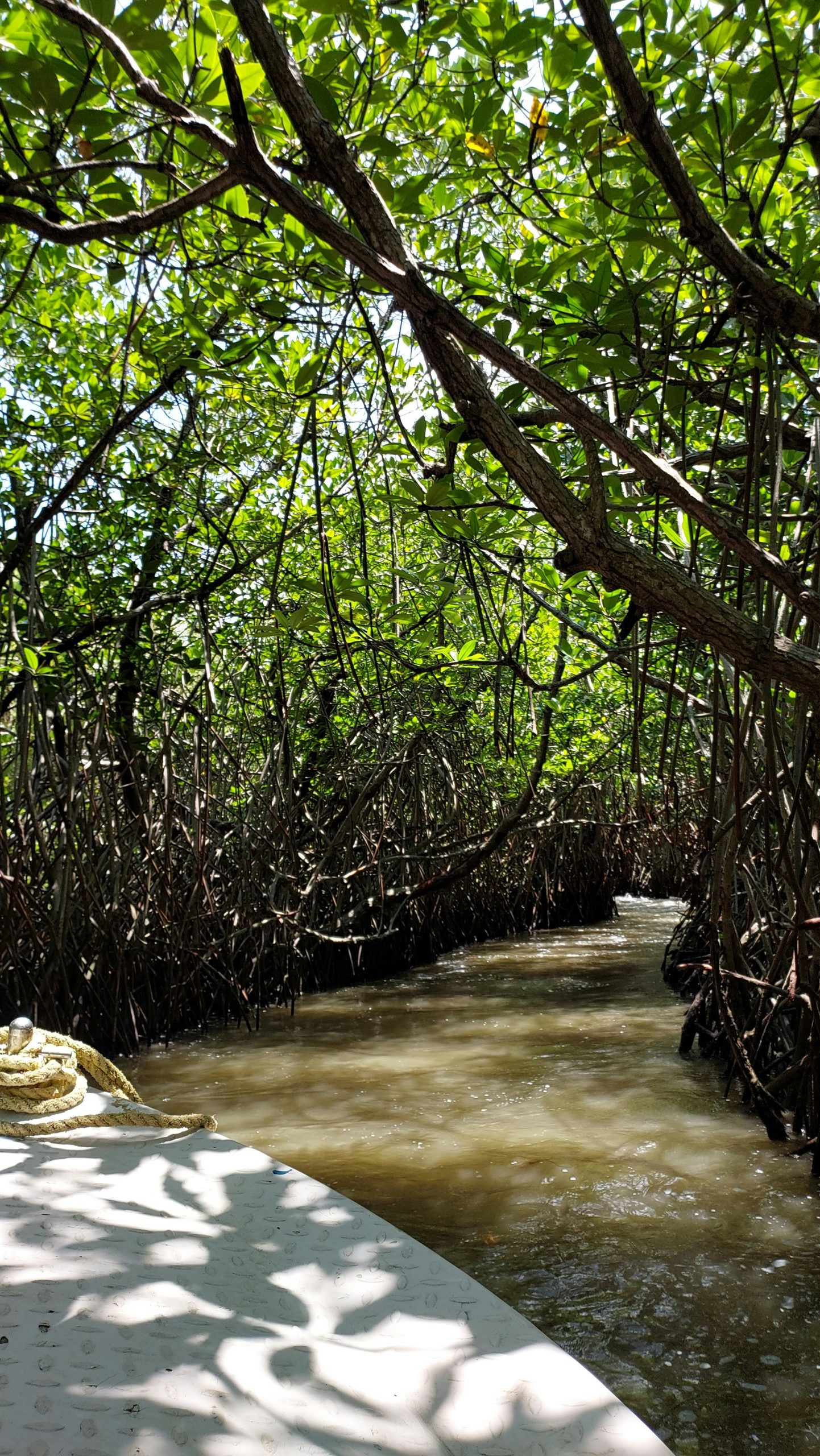
What do we mean by climate and health?
DESTINY’s climate and health repository covers the full relationship between climate change, climate variability, weather, climate-forcing agents (such as black carbon, nitrous oxide and ozone-depleting substances), fossil fuels and human health and well-being. We follow a framework adapted from the Intergovernmental Panel on Climate Change (IPCC), extended to the health context, so that our categories align with those used across climate science and human health research alike. This means we include evidence on climate-related hazards (such as heat, extreme weather and shifting seasonality), health impacts and risks (from infectious disease to mental health and under-nutrition), the pathways linking exposure to outcome and the responses available, including mitigation and adaptation, and their co-benefits and risks.
Why do we define it this broadly?
Climate and health evidence has historically been scattered across sector-specific databases and dominated by a narrow set of well-studied topics, such as air quality and heat, while mitigation, adaptation and underrepresented populations receive far less attention. A narrow scope would only reproduce these gaps. By casting a wide net across hazards, exposures and responses, DESTINY can identify where evidence is strong and where it is missing, supporting evidence producers, evidence users, decision makers and communities in equal measure. We draw on peer-reviewed studies as well as relevant reports and other evidence that may not be published in academic journals. Currently, we use the OpenAlex dataset, with plans for incorporation of further sources in the near future.
What is out of scope?
We exclude general climate science unrelated to health, health research with no discernible climate, weather or environmental exposure pathway, or subclinical research meaning studies of biological changes that occur before they translate into a diagnosable health condition or symptom.
People

Jan Minx
Principal Investigator
Potsdam Institute for Climate Impact Research

James Thomas
Co-investigator, lead for tools
University College London

Hugh Sharma Waddington
Lead for evidence
London School of Hygiene and Tropical Medicine

Pauline Scheelbeek
Co-investigator
London School of Hygiene and Tropical Medicine

Rosie Green
Co-investigator
London School of Hygiene and Tropical Medicine

Nick Simpson
Lead for cities
ASCEND

Sarah Nájera
Lead for food systems
London School of Hygiene and Tropical Medicine

Promise M Nduku
Lead for urban heat adaptation
ASCEND

Maria-Inti Metzendorf
Lead for climate & health and SDGs
Potsdam Institute for Climate Impact Research

Paul Fenton Villar
Lead for mortality & morbidity
London School of Hygiene and Tropical Medicine
Alang Ernest Wung
Researcher
eBASE (Effective Basic Services) Africa
Andy Haines
Researcher
London School of Hygiene and Tropical Medicine

Caroline Nakalema
Researcher
Center for Rapid Evidence Synthesis
Dona van Eeden
Researcher
ASCEND

Diana Danilenko
Researcher
Potsdam Institute for Climate Impact Research
Ignacio Pita Vaca
Researcher
ASCEND
Roberto Picetti
Researcher
London School of Hygiene and Tropical Medicine
Tobias Magnus Schuster
Researcher
London School of Hygiene and Tropical Medicine

Amanda Wendt
Researcher
Potsdam Institute for Climate Impact Research